Article: Understand Your Shape Beyond Labels
Understand Your Shape Beyond Labels
Understanding Your Shape Without Labels
Most people think “fit” means picking the right size.
Fashion editors know it’s much deeperit's about balance. How fabric drapes, where seams guide the eye, and how proportions harmonise with your natural shape.
The right fit doesn’t need attention.
ot simply makes everything look intentional.
Understanding your shape isn’t about squeezing yourself into categories like “pear” or “apple.” It’s about observing your own architecture your shoulders, waist, hips, posture, and how they create a rhythm. Clothes should follow that rhythm, not interrupt it.
Start With the Lines, Not the Labels
Clothes have lines: verticals lengthen, horizontals widen, diagonals sculpt.
Your body has lines too. When they sync, you look effortlessly put-together, even in basics.
Next time you try something on, ask:
-
Where does the fabric naturally fall?
-
Does it glide or cling?
-
Does the seam placement flatter or fight your proportions?
This gentle awareness is often more helpful than any size chart.
Shoulders, Waist, Hips Your Natural Blueprint
Instead of body “types,” think of this as a blueprint designers secretly use.
Observations vs How to Balance Them
|
What You Notice |
What It Means |
Best Silhouettes to Explore |
|
Shoulders feel broader than hips |
Strong upper frame |
Straight-leg pants, V-necks, clean lines |
|
Hips carry more volume |
Lower-body emphasis |
A-line skirts, structured shoulders |
|
Waist isn’t very defined |
Balanced shape |
Column dresses, elongated layers |
|
Petite torso, longer legs |
Higher visual midpoint |
Cropped jackets, mid-rise trousers |
No rules just possibilities.
You’ll start seeing why two people wearing the same outfit can look completely different. It’s not the piece it's the harmony.
Proportions Are the Silent Game-Changer
Even the simplest outfit can transform with a small shift in proportion.
Tuck the shirt slightly.
Raise the hem by an inch.
Swap heavy sneakers for lighter sandals.
Tiny adjustments change the entire visual balance.
Good proportions make you look “styled” even when you barely tried.
Fabrics Have a Personality Let Them Speak
Soft fabrics drape.
Structured fabrics define.
Stretch fabrics follow your movement.
When the fabric personality matches what you want to highlight, the whole outfit feels easy.
Example:
A structured blazer on a softer frame brings presence.
A flowy top on a stronger frame brings fluidity.
The magic is in mixing these intentionally but lightly nothing forced.
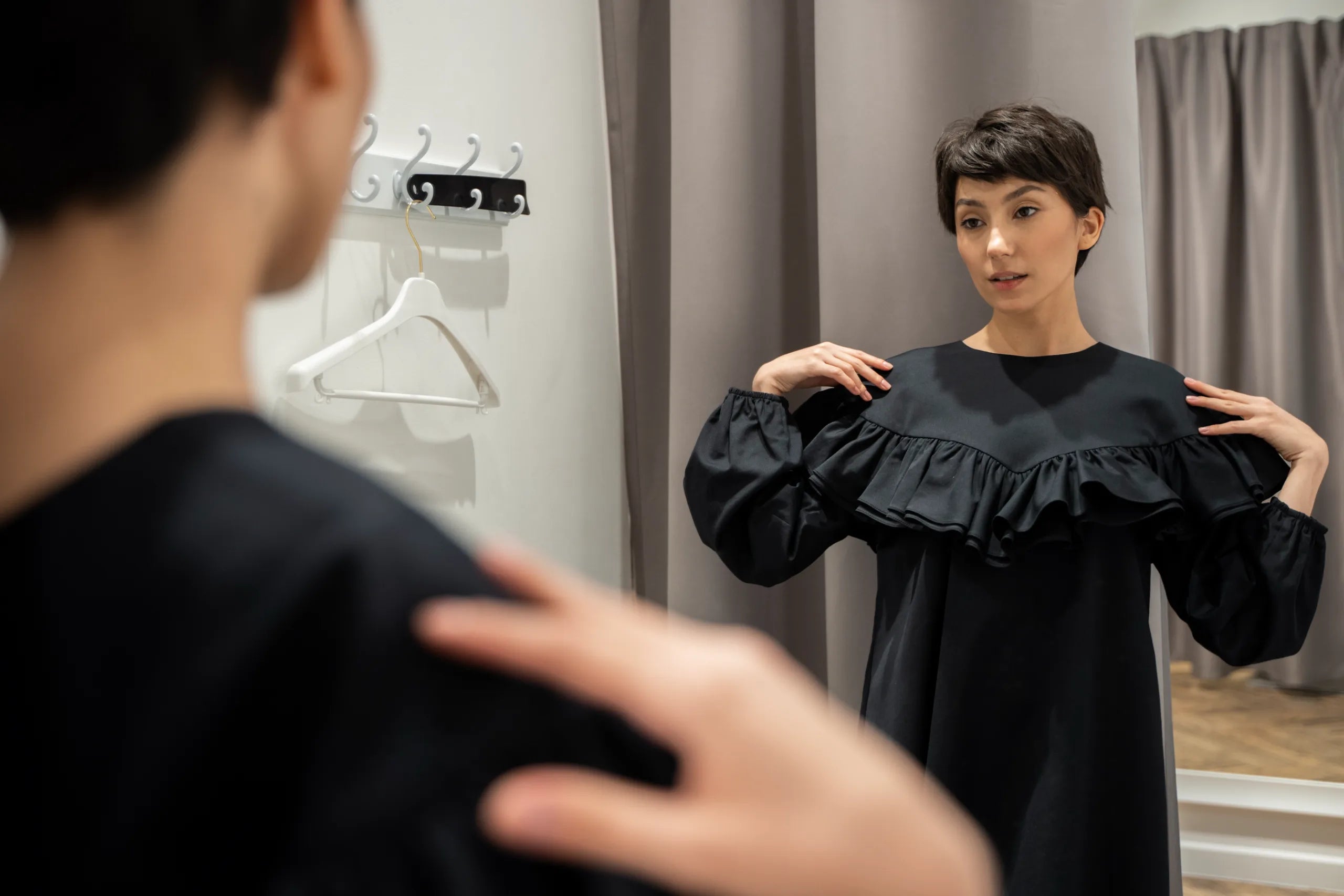
The 5-Second Mirror Test
Every fashion editor quietly uses this.
After dressing, stand naturally and ask:
“Is there one thing I’d adjust to make this feel like me?”
A cuff.
A necklace.
A switch from round-toe to pointed toe.
A sleeve push-up.
One subtle refinement often shifts the entire silhouette.
This is what creates that “quiet confidence” people notice before they register the clothes.
Great style isn’t about chasing trends or decoding body charts.
It’s about paying attention softly, intuitively, without pressure.
You’re not trying to hide anything or highlight everything.
You’re just aligning the outfit with you.
Once you start studying fit through this lens, dressing becomes lighter, calmer, and strangely grounding.
Not because you have more clothes…
but because you understand yourself better in them.

Written by Connect Stylia